
یہ مضمون فی الحال انگریزی میں دستیاب ہے۔
Walk the house before changing a setting
Observe birds at different points and times, including near inlets, walls and drinkers. A broadly even distribution and normal activity are useful signs; crowding, avoidance of an area, panting or huddling warrant investigation. Behaviour has more than one possible cause, so look at the environment, health and access to feed and water together.
Check where and what the sensor measures
Confirm the sensor is at the recommended height and position, protected from direct heat and drafts, and maintained according to the manufacturer’s instructions. Compare readings with a trusted calibrated instrument at bird level in several locations. A correct reading in one location does not prove the entire shed is uniform.
Look beyond temperature
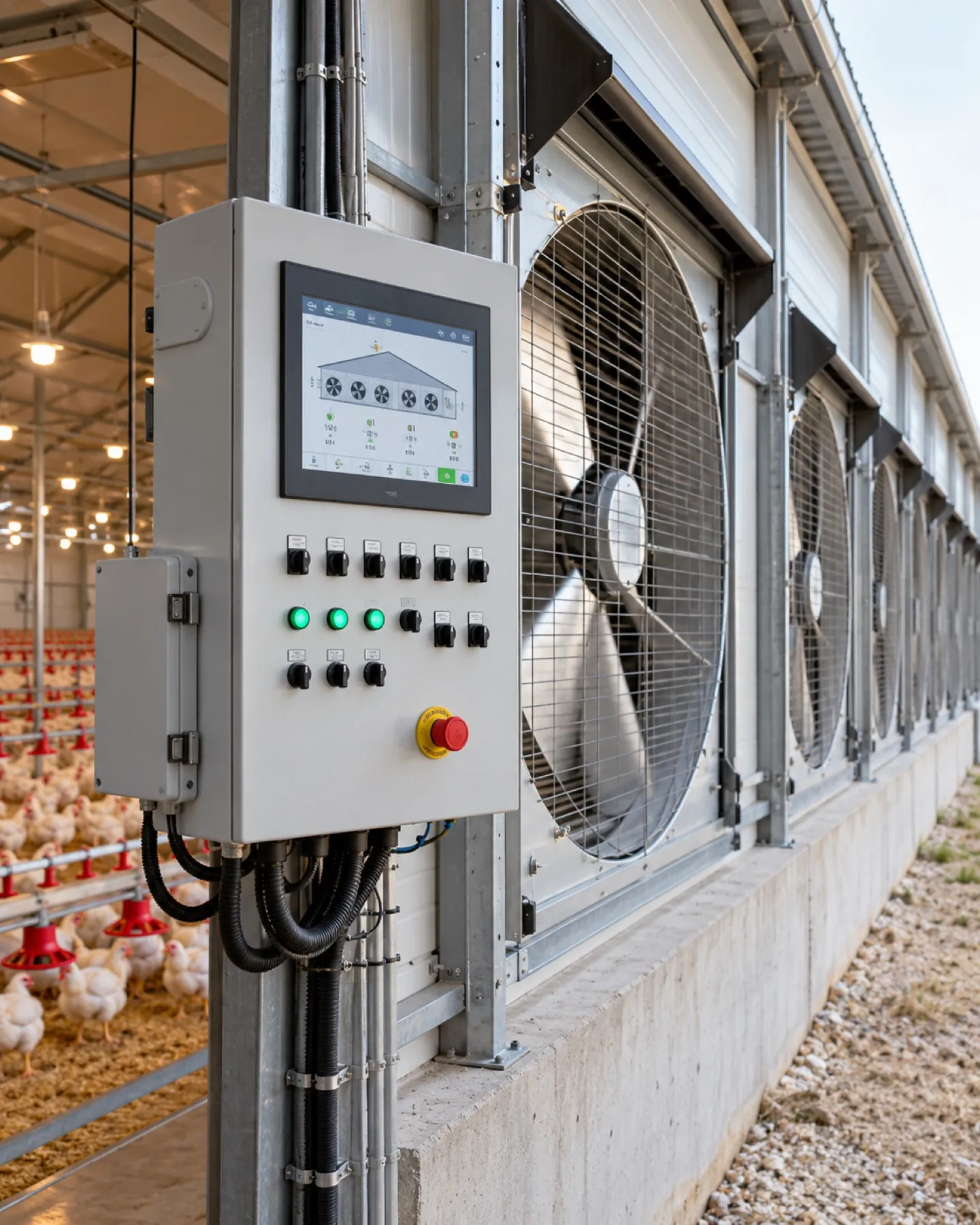
Relative humidity, air speed, ventilation, litter condition and air quality all affect comfort. Check fan operation, inlets, controller settings and alarms, and review the ventilation plan for the birds’ age, stocking and outdoor weather. Do not stop minimum ventilation merely to hold temperature: fresh air and removal of moisture and gases matter too.
Change deliberately and review
Record the observation and current settings, make a controlled adjustment within the equipment and flock management guidance, then check the birds again. Where conditions are severe, equipment fails or signs persist, contact your veterinarian or ventilation adviser promptly. A record of the change and response helps distinguish a lasting improvement from a brief fluctuation.