
یہ مضمون فی الحال انگریزی میں دستیاب ہے۔
Prepare the house before arrival
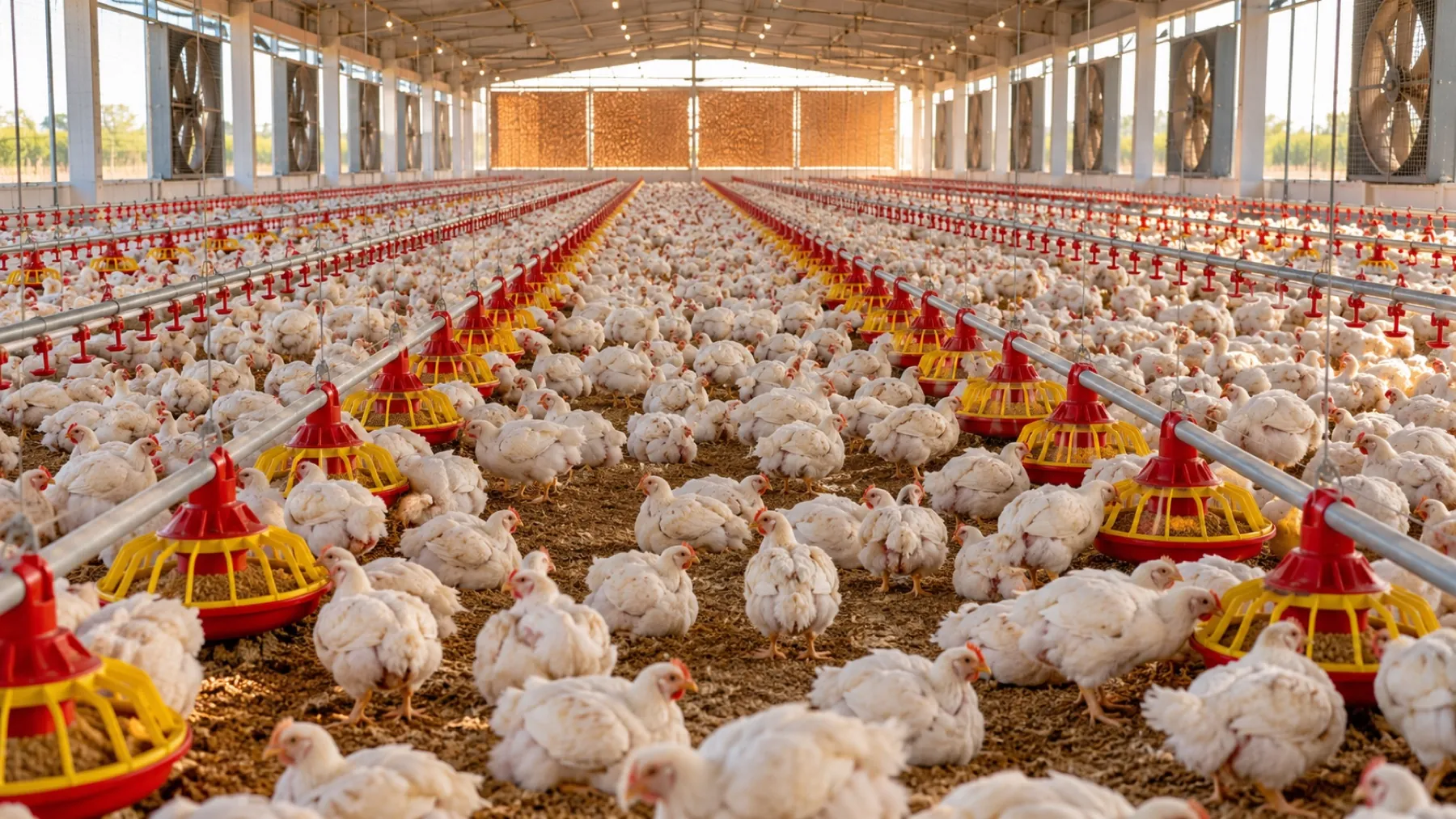
Clean and disinfect the house, check equipment and pre-warm the floor, litter and air according to the breed supplier’s current guidance and local conditions. Confirm that drinkers work, feed is accessible and minimum ventilation is operating without chilling the chicks. Review chick numbers, hatchery information and any vaccination records before placement.
Watch behaviour across the house
Check chicks soon after placement and repeat observations throughout the day and night. Spread, activity, vocalisation and breathing provide context for temperature and humidity readings. Huddling, crowding away from an inlet, lethargy or panting are signals to investigate; check several locations rather than relying on a single controller display.
Confirm feed and water intake
Check that chicks can reach feeders and drinkers and that lines deliver water at the correct height. Assess crop fill in a representative sample using the breed supplier’s method and timetable. Soft, full crops indicate chicks have found feed and water; poor or uneven fill should trigger an immediate review of access, temperature, light and equipment.
Use records to guide the next check
Log conditions at chick level, feed and water intake, mortality, equipment problems and adjustments. Compare early weight and uniformity with the relevant breed guidance, and investigate unusual losses or chicks that remain inactive with your veterinarian. Early corrections are most useful when the team records what changed and whether the birds responded.