
یہ مضمون فی الحال انگریزی میں دستیاب ہے۔
Start with the right programme
There is no universal schedule for every farm. A veterinarian should consider the diseases present locally, the flock’s age and health, maternal antibodies, the hatchery vaccination history and the instructions for the specific product. Record what has already been given before planning the next step. A vaccine name on a calendar does not, by itself, show that the birds received an effective dose.
Protect the product until use
Check the label for storage, expiry and transport requirements. Keep a temperature log for the vaccine refrigerator and investigate excursions; do not assume a product remains effective after improper storage. Organise doses and equipment before removing a vial from controlled storage. Ask the supplier or veterinarian about any uncertain product before using it.
Prepare and administer carefully
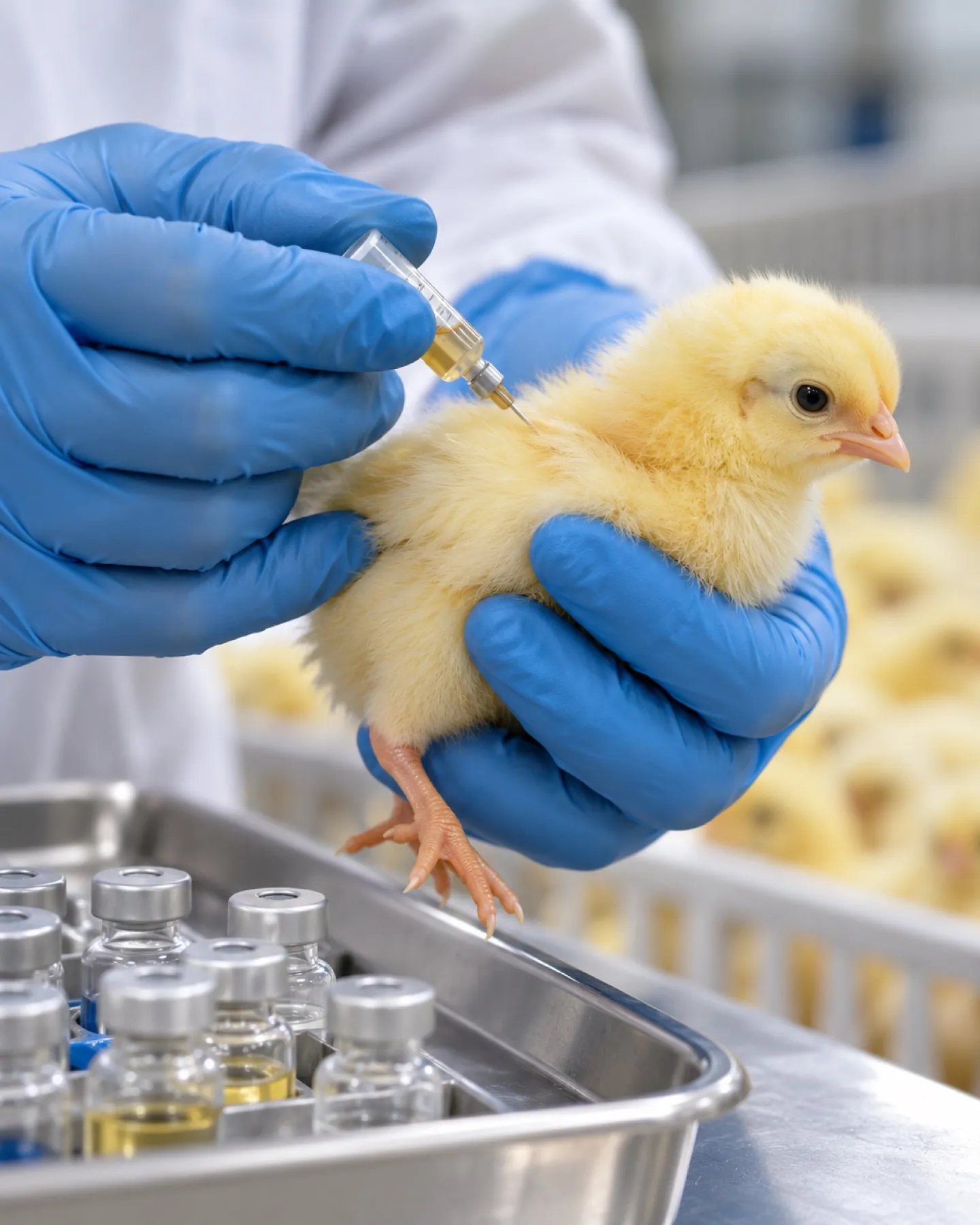
Different products and routes have different instructions. For drinking-water vaccines, follow the product label and veterinary plan for water quality, mixing, timing and delivery. Aviagen’s field guidance highlights clean vaccine equipment, protection from disinfectant residues and checking flow along every line. Do not apply a generic water-withdrawal period in hot weather or to a different product without veterinary direction.
Check the whole flock, then document
Walk the house during administration and check that vaccine reaches the end of each drinker line or that the selected route achieves even coverage. Record the product, batch, number of doses, route, time and any problems. Follow up according to the veterinary monitoring plan; a vaccination record documents the process, while flock assessment and appropriate tests help assess its outcome.