
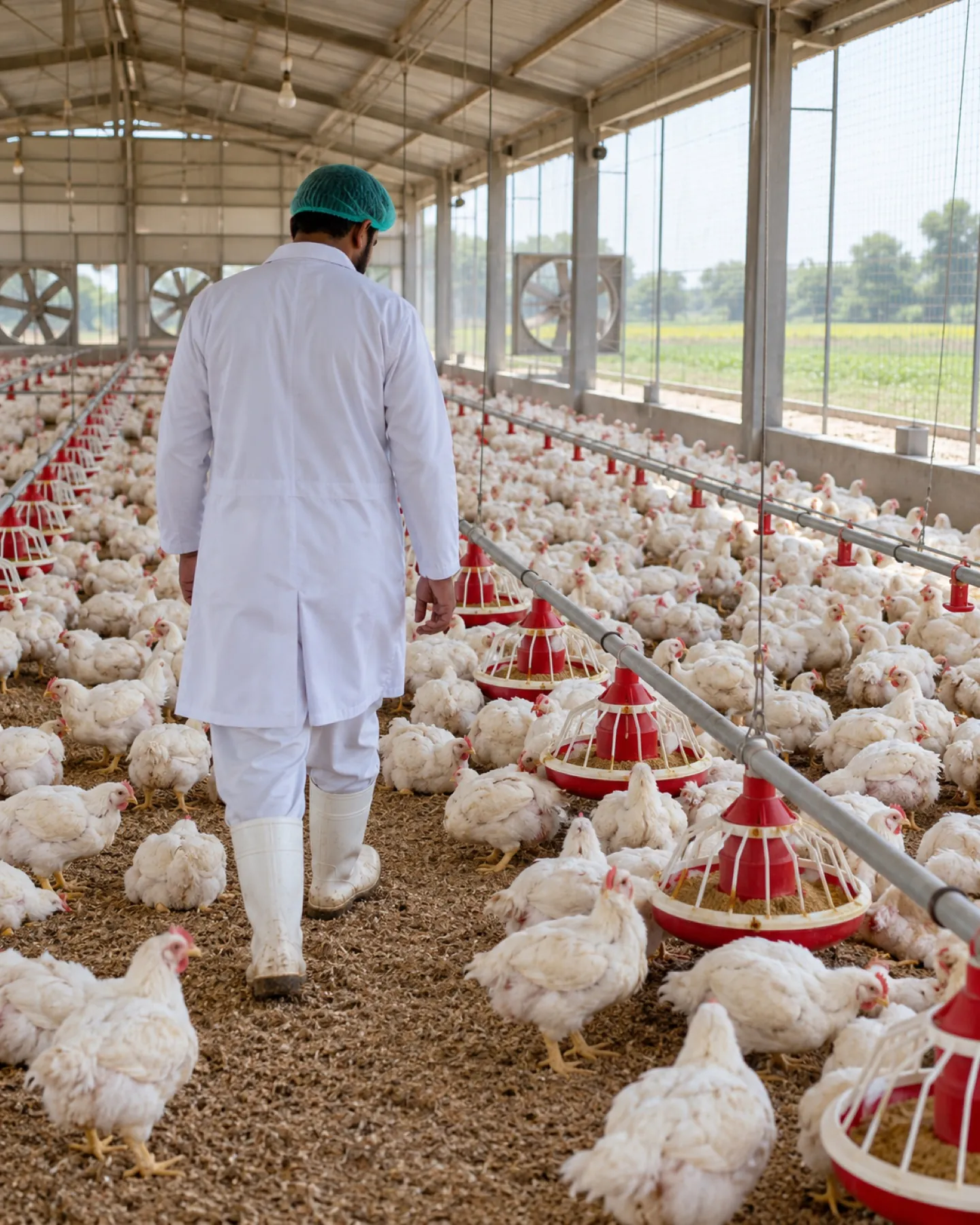
Post-Mortem & Diagnosis
An on-farm post-mortem can help identify a likely issue within hours. Findings are considered with flock age, mortality pattern and vaccination history, with laboratory work where useful.
Areas of focus
for your farm.
Advice is shaped around the flock and the practical conditions on the farm.
- Examine fresh deaths and sick culls systematically
- Read lesions alongside age and mortality trend
- Consider samples for laboratory confirmation
- Use findings to review treatment and prevention
A practical review,
step by step.
Each step moves from your farm information toward practical next guidance.
-
Step 1
Share the flock history
Describe the flock and the changes that prompted your concern.
See details- Share the age of the flock.
- Describe how the mortality pattern has changed.
- Explain the visible signs you have noticed.
What you get Flock context for the diagnostic discussion.
-
Step 2
Discuss bird examination
Discuss arrangements to examine several fresh birds where possible.
See details- Explain which birds are available for examination.
- Discuss whether a farm visit is needed.
- Clarify the examination arrangements with the veterinarian.
What you get An agreed next step for examination.
-
Step 3
Review the findings
Discuss the findings and whether laboratory confirmation would help.
See details- Consider the findings alongside the flock history.
- Clarify what remains uncertain.
- Discuss whether further laboratory work is useful.
What you get A clearer understanding of findings and next checks.
-
Step 4
Guide the next decisions
Use the diagnostic review to discuss treatment and prevention.
See details- Discuss treatment advice with the veterinarian.
- Review prevention practices that may need attention.
- Clarify which flock changes to share at follow-up.
What you get Advice on treatment and prevention decisions.
Understand the issue,
then choose a next step.
A single bird may not show the whole picture. Looking at several fresh birds with flock history can clarify likely causes and help avoid treating by guesswork.
Get guidance
for your flock.
Share your shed and flock context to discuss a suitable next step.